Kronozio's founders had a vision: to create a game changer for selling sports cards. They
wanted a solution that would allow users to scan their sports cards in bulk, document them
quickly, list them online, and optimize the shipping process.
I met David Lafond while we were both working at a software development company. We
quickly became friends and started talking about our passions and projects. When David
told me about his vision for Kronozio, I was immediately intrigued and excited to be part
of such an ambitious project.
I was the lead developer of the PC project but ended up working on all aspects of the
platform, from the web front end to the backend. I also worked closely with the team to
define features and requirements and to create a powerful user interface.
Kronoscan - Fast Scanning
With auto-feeder scanners, fast front and back scanning is possible. But Kronoscan is
much more than a front end for built-in scanner functions:
It can automatically crop and rotate the scanned images
It automatically detect bad scans an allows users to make corrections
It is fulling integrated with the card position management system that allows fast
shipping
It can also be used with a regular flatbed scanner, or even with a camera.
For high-end cards, users prefer flatbed scanners because they avoid any potential
damage.
For this part of the project, the main goal was to crop and rotate the scanned images. I
used OpenCV to detect the cards and crop them with a margin that allows potential buyers
to see the edges which is important for grading.
I developed an algorithm that processes the scans with a range of parameters and uses
the best results to crop the cards. It was a challenge because card colors and patterns
vary widely.
Kronocard - Card Manager
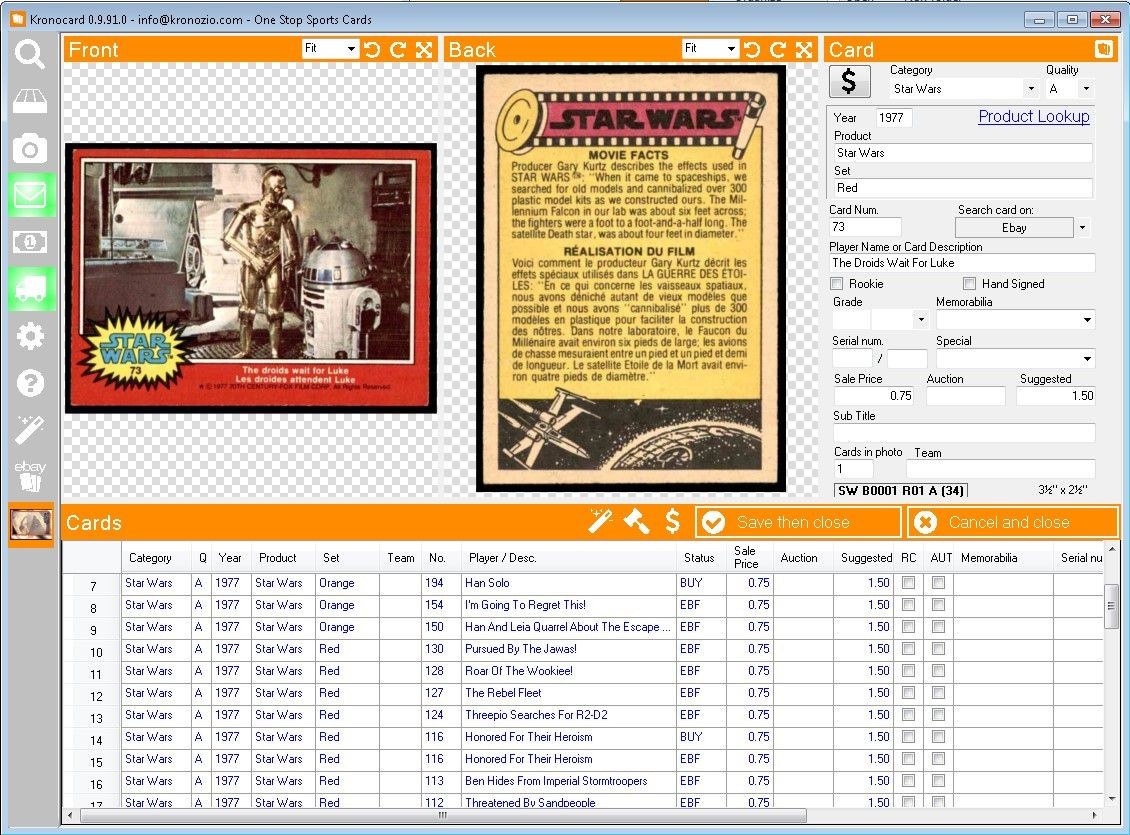
Our original goal was to build the card management system as a local web application.
However, because of time constraints and the need for a powerful user interface, we
decided to develop it as a PC application using WinForms.
The application was designed to be very fast and efficient, with many shortcuts and
features to help users document their cards quickly. It was fully integrated with the
scanning system, allowing us to reuse components designed for Kronoscan - a major time
saver.
The same screen was used by third-party documenters based in Asia to document cards for
our users at very low cost. Later, Kronozio developed an AI documentation system, but
the card manager is still used by users who want more control over documentation (and to
fix AI misses).
Card data was saved in a local SQL Server database using Entity Framework. A Windows
service synchronized the local database with Azure Table Storage and Azure Search, and
uploaded card images to Azure Blob Storage for the web front end. This allowed users to
access their card data from anywhere and easily list their cards on the marketplace.
Faster Marketplace Front End
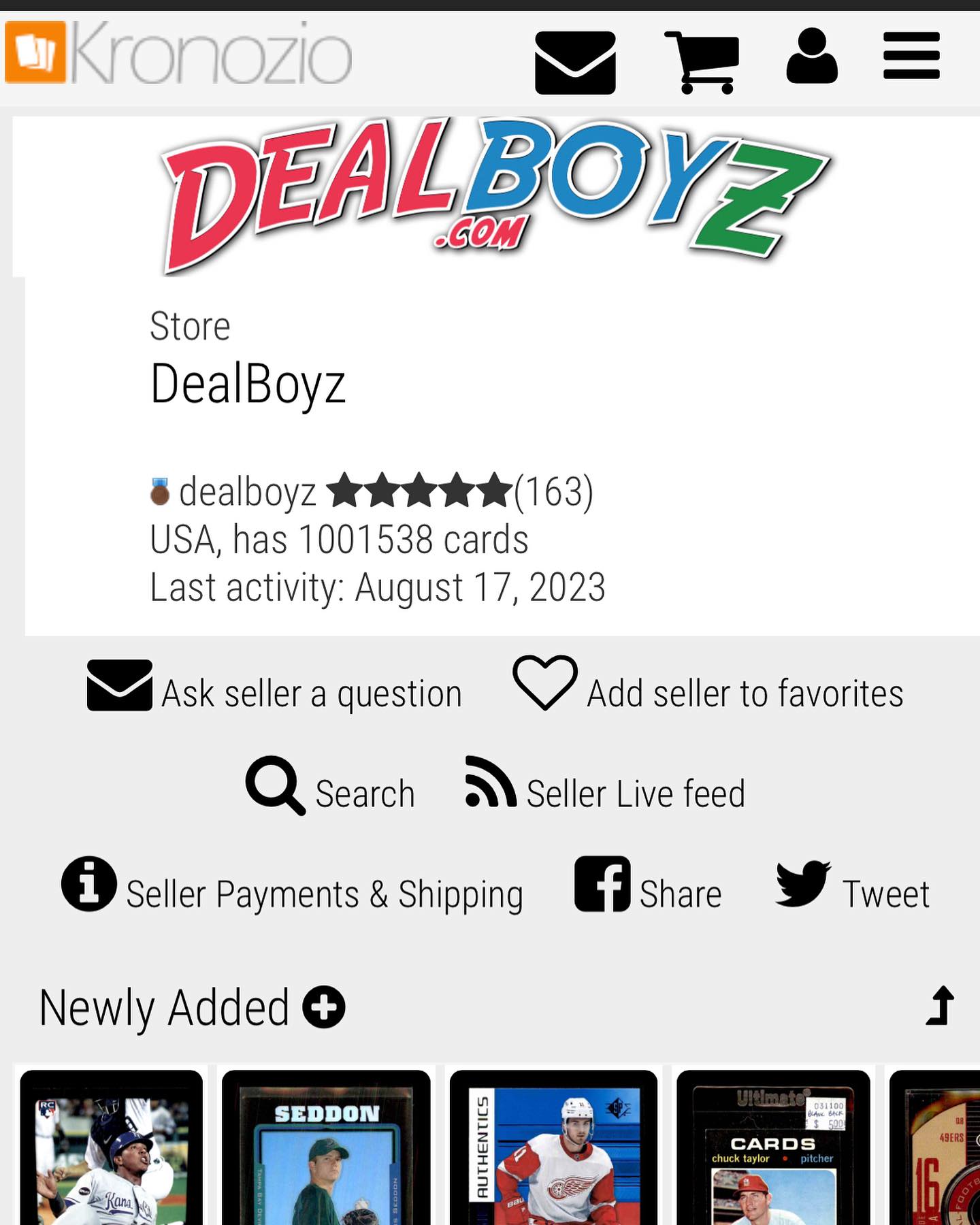
The web front end of Kronozio was mainly a marketplace where users could list their
cards online. It was initially developed by an external team using Angular, but it was
very slow, so we refactored it using vanilla JavaScript to gain more control and
optimize performance.
The refactoring was a major success, resulting in a 10× performance improvement. Earlier
Angular versions constantly rewrote the browser DOM, causing severe performance issues.
The marketplace closed in 2025 as Kronozio shifted focus to scanning, card management,
AI documentation, and the eBay connector. However, my code and design ran from 2017 to
2025.
The search engine, powered by Azure Search, allowed users to quickly find the cards they
wanted. In the UI, every element of the card description was clickable, enabling users
to find similar cards instantly. For example, clicking a player’s name would return all
cards featuring that player.
Ebay Connector
Kronozio quickly realized how difficult it was to compete with established players in
the sports‑card sector. If you can’t beat them, join them. So we focused on scanning and
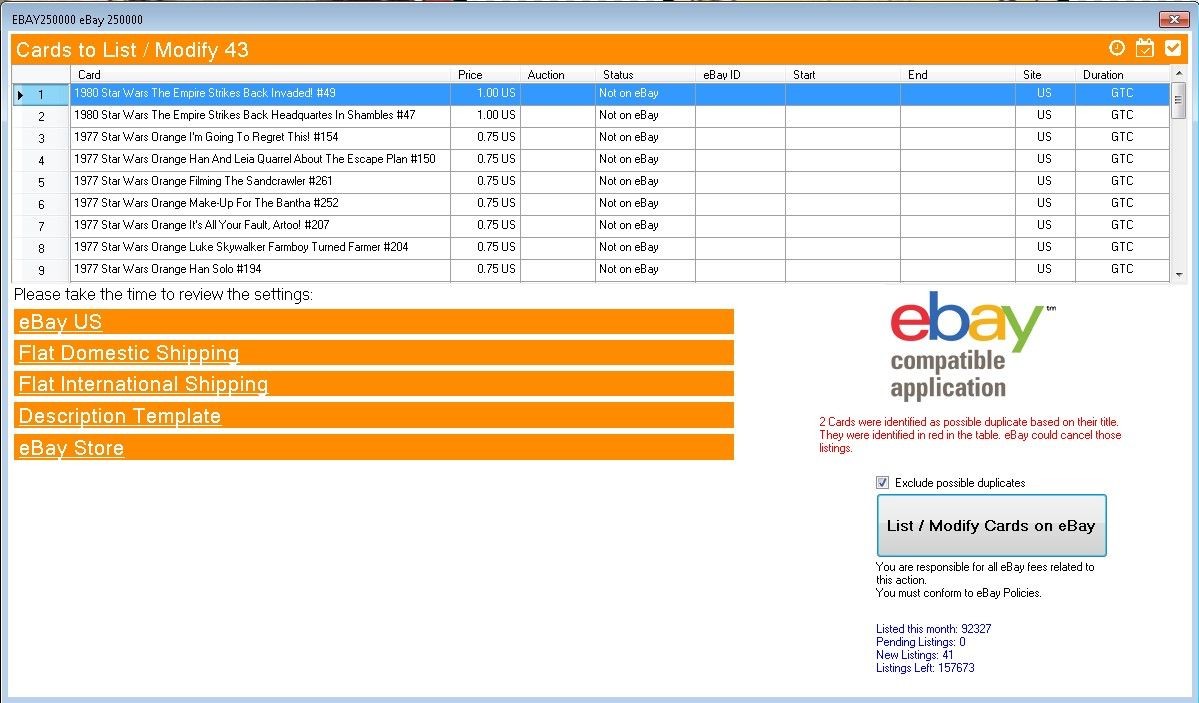
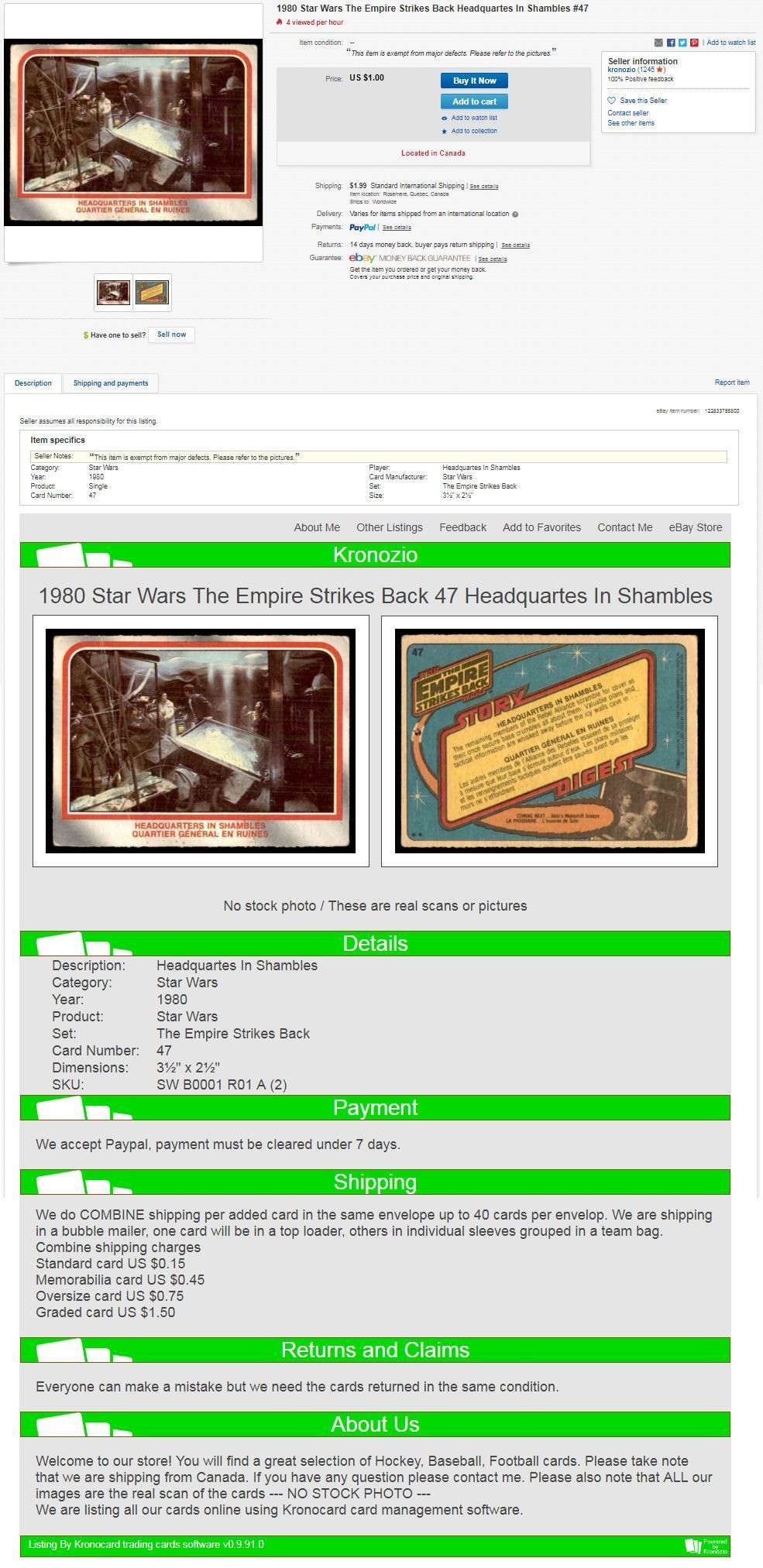
card management and developed an eBay connector that allowed users to easily list their
cards on eBay.
The connector was a major success, giving users access to a much larger audience and
helping them sell cards more easily. It was common for Kronocard users to manage tens of
thousands of eBay listings through our connector.
It also became a strong monetization channel, as we charged a small fee for each card
listed through the connector.
Summing it up
Kronozio has big plans to move to a modern, fully web based application with a browser
plugin for scanning. I know they will succeed: I saw their resilience and dedication
firsthand, and how they added AI documentation after I left.
Even eight years later, most of the work I did with my friends at Kronozio is still in
use. This is a testament to the quality and longevity of the solutions we built
together.